

Featured Publications
-
![]()
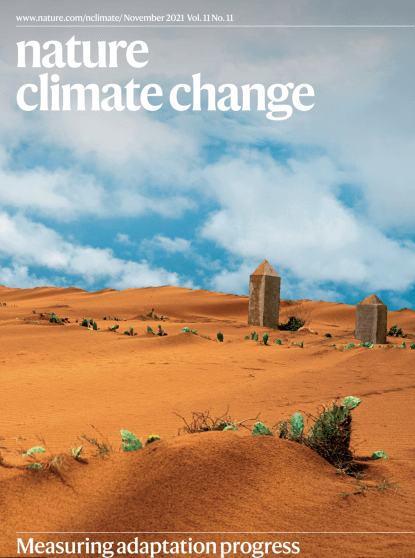
A systematic global stocktake of evidence on human adaptation to climate change
This global synthesis of more than 1,600 studies found that climate adaptation efforts remain largely fragmented, local, and incremental, with limited evidence of transformational change or actual risk reduction. The findings highlight critical research priorities, including evaluating adaptation effectiveness, understanding its limits, and addressing gaps in global representation and evidence.
-
![Cover of a book titled 'Regional Environmental Change', published by Springer, August 2013, Volume 13, Number 4, featuring images related to landscape, water, and climate change.]()
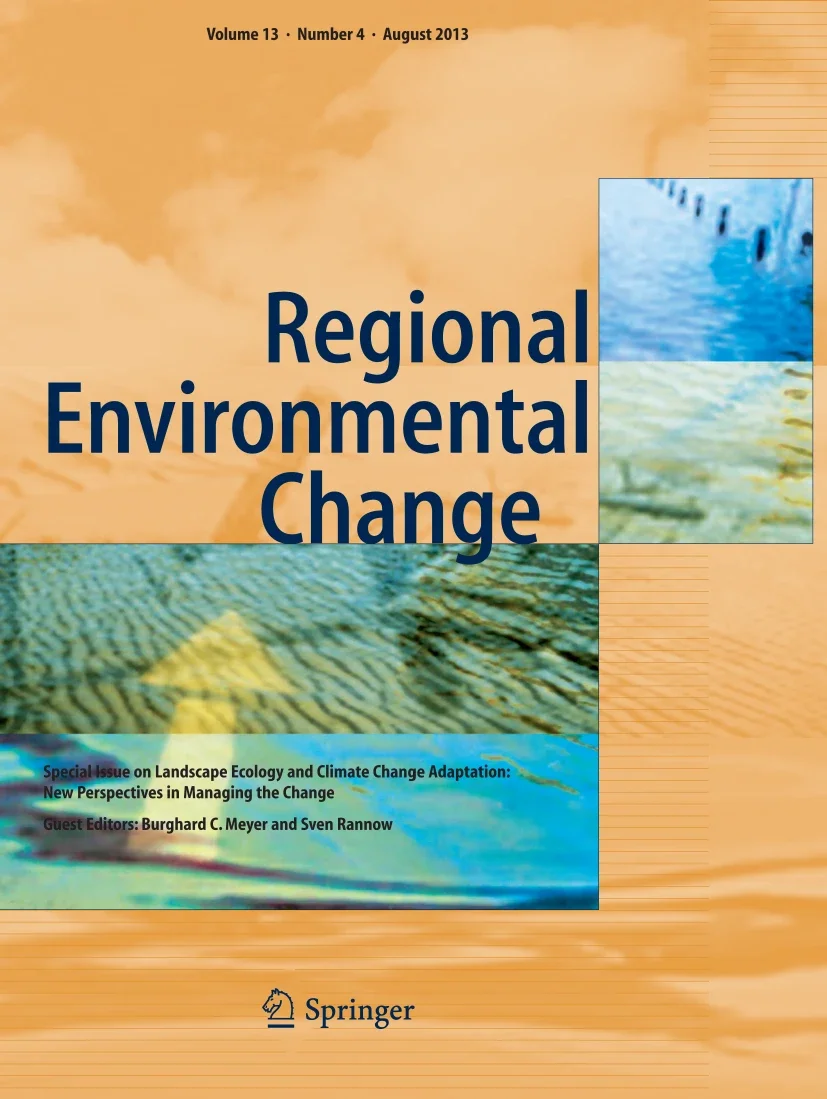
Global evidence of constraints and limits to human adaptation
Understanding the barriers to climate adaptation is essential for identifying where responses may fall short and where additional support is needed. This systematic review found that financial, governance, and institutional challenges are widespread, while research on the hard and soft limits of adaptation remains limited. These findings can help inform more proactive approaches to adaptation planning, financing, and policy.
-
![Two workers in safety gear inspecting a large wind turbine in a field with multiple wind turbines in the background, under a sky with birds flying at sunset.]()
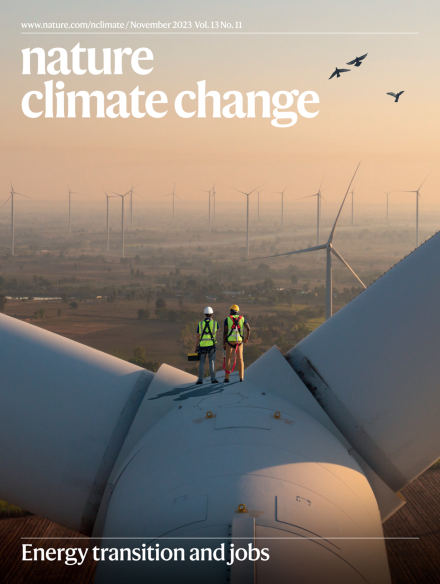
A global assessment of actors and their roles in climate change adaptation
This study examines how governments, communities, and other actors contribute to climate change adaptation across different regions. It finds that individuals and households play a central role in implementing responses, while governments lead planning and civil society helps coordinate efforts, revealing important gaps in how adaptation responsibilities are shared and understood.
Our work has been featured in






2026
-
Fischer A.P., et al. (2024) Climate Risk Management
We assessed how people adapt to climate change in the context of forests through a systematic review of the international empirical research literature. We found that drought, precipitation variability, extreme precipitation and flooding, and extreme heat were the climatic stressors to which responses were most frequently documented. Individuals and households received the most research attention, followed by national government, civil society, and local government. Europe and North America were the geographic foci of more research than other regions. Behavioral responses were more reported than technical and infrastructural responses and institutional responses. Within these types of responses, actors used a wide variety of practices such as replanting, altering species composition, and adopting or changing technology. Adaptation efforts in early planning and advanced implementation received some attention, but early implementation and expanding implementation were most reported. While connections between responses and risk reduction were discussed, there is limited evidence of risk reduction. Our review contributes to the scholarly and practical understanding of how people adapt to climate change in the context of forests. The review also identifies opportunities for future research on adaptation to other climatic stressors, such as wildfires and tree pests and pathogens, adaptation in other geographic areas, especially Oceania, and adaptation by actors beyond the individual and household level and through institutional adaptation efforts.
Download the paper
-
Item description
-
Item description
-
Item description
2024
-
Fischer A.P., et al. (2024) Climate Risk Management
We assessed how people adapt to climate change in the context of forests through a systematic review of the international empirical research literature. We found that drought, precipitation variability, extreme precipitation and flooding, and extreme heat were the climatic stressors to which responses were most frequently documented. Individuals and households received the most research attention, followed by national government, civil society, and local government. Europe and North America were the geographic foci of more research than other regions. Behavioral responses were more reported than technical and infrastructural responses and institutional responses. Within these types of responses, actors used a wide variety of practices such as replanting, altering species composition, and adopting or changing technology. Adaptation efforts in early planning and advanced implementation received some attention, but early implementation and expanding implementation were most reported. While connections between responses and risk reduction were discussed, there is limited evidence of risk reduction. Our review contributes to the scholarly and practical understanding of how people adapt to climate change in the context of forests. The review also identifies opportunities for future research on adaptation to other climatic stressors, such as wildfires and tree pests and pathogens, adaptation in other geographic areas, especially Oceania, and adaptation by actors beyond the individual and household level and through institutional adaptation efforts.
Download the paper
2023
-
Petzold J., et al. (2023) Nature Climate Change
n assessment of the global progress in climate change adaptation is urgently needed. Despite a rising awareness that adaptation should involve diverse societal actors and a shared sense of responsibility, little is known about the types of actors, such as state and non-state, and their roles in different types of adaptation responses as well as in different regions. Based on a large n-structured analysis of case studies, we show that, although individuals or households are the most prominent actors implementing adaptation, they are the least involved in institutional responses, particularly in the global south. Governments are most often involved in planning and civil society in coordinating responses. Adaptation of individuals or households is documented especially in rural areas, and governments in urban areas. Overall, understanding of institutional, multi-actor and transformational adaptation is still limited. These findings contribute to debates around ‘social contracts’ for adaptation, that is, an agreement on the distribution of roles and responsibilities, and inform future adaptation governance.
Download the paper
-
Petzold J., et al. (2023) Frontiers in Climate
Islands are at the center of discourses on climate change. Yet despite extensive work on diverse island systems in a changing climate, we still lack an understanding of climate change-related responses amongst islands and what shifting from what might be called “tinkering” (perhaps heat warnings) to “transformational” adaptation (perhaps relocation) means for these vastly different landmasses which are often grouped together by default. Through a systematic review of the climate change adaptation scientific literature, this paper critically reflects on how considering islands as a homogenous ensemble and the use of buzzwords such as “transformational adaptation” may be problematic for diverse island realities under climate change. Our findings show that the adaptation evidence base actually provides literature on contrasting island types and cultural and political contexts, including Small Island Developing States as well as other island territories. This study finds research gaps with respect to regions (e.g., South America, Africa, and Mediterranean) and that there is overall both little evidence of and a lack of context-specific definitions of transformational adaptation in island contexts. The adaptation literature does not yet fully reflect the experiences or needs of islands regarding transitions and transformations throughout history.
Download the paper
2022
-
Petzold J., et al. (2023) Nature Climate Change
n assessment of the global progress in climate change adaptation is urgently needed. Despite a rising awareness that adaptation should involve diverse societal actors and a shared sense of responsibility, little is known about the types of actors, such as state and non-state, and their roles in different types of adaptation responses as well as in different regions. Based on a large n-structured analysis of case studies, we show that, although individuals or households are the most prominent actors implementing adaptation, they are the least involved in institutional responses, particularly in the global south. Governments are most often involved in planning and civil society in coordinating responses. Adaptation of individuals or households is documented especially in rural areas, and governments in urban areas. Overall, understanding of institutional, multi-actor and transformational adaptation is still limited. These findings contribute to debates around ‘social contracts’ for adaptation, that is, an agreement on the distribution of roles and responsibilities, and inform future adaptation governance.
Download the paper
-
Petzold J., et al. (2023) Frontiers in Climate
Islands are at the center of discourses on climate change. Yet despite extensive work on diverse island systems in a changing climate, we still lack an understanding of climate change-related responses amongst islands and what shifting from what might be called “tinkering” (perhaps heat warnings) to “transformational” adaptation (perhaps relocation) means for these vastly different landmasses which are often grouped together by default. Through a systematic review of the climate change adaptation scientific literature, this paper critically reflects on how considering islands as a homogenous ensemble and the use of buzzwords such as “transformational adaptation” may be problematic for diverse island realities under climate change. Our findings show that the adaptation evidence base actually provides literature on contrasting island types and cultural and political contexts, including Small Island Developing States as well as other island territories. This study finds research gaps with respect to regions (e.g., South America, Africa, and Mediterranean) and that there is overall both little evidence of and a lack of context-specific definitions of transformational adaptation in island contexts. The adaptation literature does not yet fully reflect the experiences or needs of islands regarding transitions and transformations throughout history.
Download the paper